For many women who are returning to Torah, the Sabbath can feel both exciting and intimidating.
Questions naturally arise: Am I doing this right? Am I doing too much? Am I not doing enough?
Much of that uncertainty likely comes from not having kept the Sabbath when they were growing up, or simply only going by what they’ve heard.
So let us slow down and do something that will take away the confusion: read carefully what the Bible actually says.
No traditions. No cultural expectations. Just the Word of God.
The Heart of the Sabbath
Before we list what is forbidden, we must understand why the Sabbath exists.
“but the seventh day is a Shabbat for Adonai your God. ”
— Exodus 20:10a
The Sabbath is not primarily about restriction. It is about belonging. It is time set apart—holy time—meant to restore us, align us with God’s appointments, and remind us that provision comes from Him, not from our laboring.
So with that, what do the Scriptures actually say that we shouldn’t do?
Kindling or Lighting a Fire
“You are not to kindle a fire in any of your homes on Shabbat.”
— Exodus 35:3
This is one of the most specific physical actions named as being prohibited on the Sabbath.
It is also much more than simply clicking a lighter or striking a match. To kindle a fire was incredible work. You had to collect all the wood, you had to do the hard, physical act of starting a fire. It was not easy.
I recall when I was in girl scouts, trying to kindle a fire by hand. After an untold amount of time, I got no further than smoking sticks and blistered fingers.
Ordinary Work Is Forbidden
This is about your normal labor—the work you do to earn, produce, manage, or maintain your livelihood.
“You have six days to labor and do all your work, but the seventh day is a Shabbat for Adonai your God. On it, you are not to do any kind of work — ”
— Exodus 20:9–10a
This is not about avoiding all activity. It is about ceasing from the work that defines your other six days. The Sabbath teaches trust: God can run the world without my effort for one day.
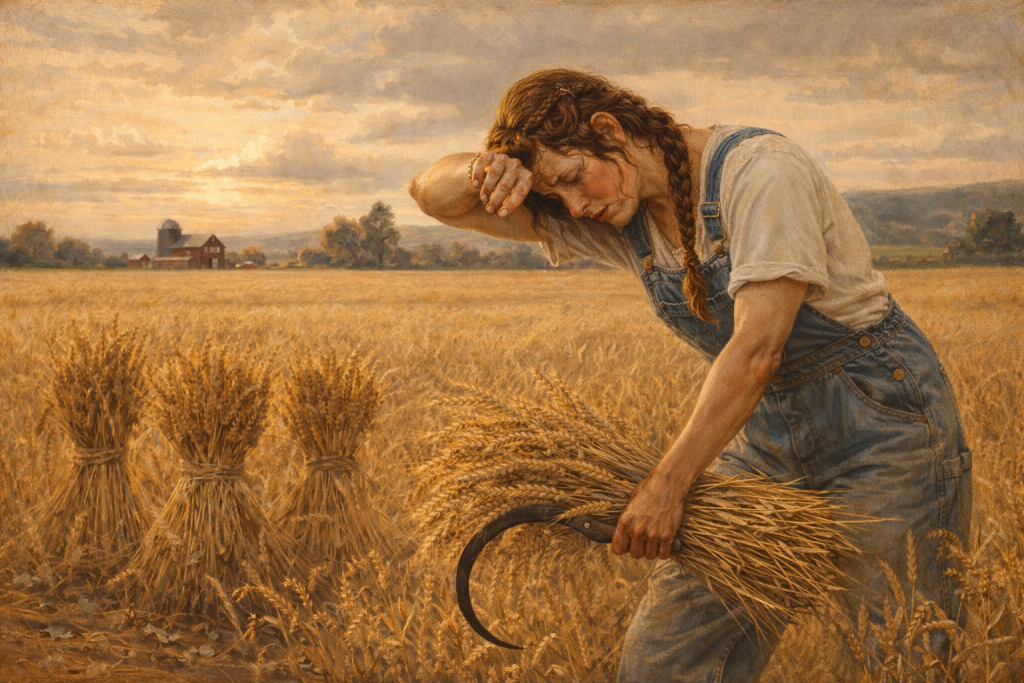
This prohibition of work included when it was plowing or harvest season.
“Six days you will work, but on the seventh day you are to rest — even in plowing time and harvest season you are to rest”
— Exodus 34:21
Don’t Make Others Work Either
This is about shifting labor onto others so you can “rest.”
“you are not to do any kind of work — not you, your son or your daughter, not your male or female slave, not your livestock, and not the foreigner staying with you inside the gates to your property.”
— Exodus 20:10
“but the seventh day is a Shabbat for Adonai your God. On it you are not to do any kind of work — not you, your son or your daughter, not your male or female slave, not your ox, your donkey or any of your other livestock, and not the foreigner staying with you inside the gates to your property — so that your male and female servants can rest just as you do.”
— Deuteronomy 5:14
The Sabbath is never individualistic. It is a shared rest for all. True Sabbath keeping isn’t just about you, but about everyone around you – even the animals!
Commerce and Profit
This is about buying, selling, and conducting business on the Sabbath.
“You say, “When will Rosh-Hodesh be over, so we can market our grain? and Shabbat, so we can sell wheat?”
— Amos 8:5a
“If the peoples of the lands bring merchandise or food to sell on Shabbat, we will not buy from them on Shabbat or on a holy day.”
— Nehemiah 10:31(32)
The issue is not money itself—it is turning a holy day into a market day. The Sabbath breaks the cycle of constant productivity and reminds us that God is our provider.
Remember, wea re commanded in scripture not to profane the Sabbath.
To profane the Sabbath means to treat what God has declared holy as if it were common, ordinary, or unimportant.
In Scripture, the idea of profaning is the opposite of sanctifying—instead of setting something apart for God, it is brought down to the level of any other ordinary thing.
This really goes back to the previous prohibitions. You don’t work, and you don’t make others work.
If it is Shabbat, and you’re on Amazon ordering things…someone, somewhere is having to work and pack up your orders. Your Amazon order can wait ’til tomorrow.
Carrying Burdens for Work or Trade
This is about transporting loads connected to labor or commerce.
“ Here is what Adonai says: “If you value your lives, don’t carry anything on Shabbat or bring it in through the gates of Yerushalayim; don’t carry anything out of your houses on Shabbat; and don’t do any work. Instead, make Shabbat a holy day. I ordered your ancestors to do this,”
— Jeremiah 17:21–22
This passage specifically addresses business-related burdens. Scripture does not apply this to ordinary movement or acts of care.
As an example, I have a homestead with animals. If my donkey needs hay, I’ll carry some to her hay rack to feed her. Just enough to get her by for the day. But I’m not going to be hauling whole bales all over the place.
Do what you need to do to provide for those in your care, but keep it simple. Everything else can wait.
Treating the Sabbath as Common Is Forbidden
As mentioned above, we are not to approach the Sabbath as just another day, and God takes that very seriously!
“Therefore you are to keep my Shabbat, because it is set apart for you. Everyone who treats it as ordinary must be put to death; for whoever does any work on it is to be cut off from his people.
— Exodus 31:14
He says we shouldn’t even talk about work. When it comes to the Sabbath, He wants our rest, but He wants the rest of us too. Our hearts and our minds on Him.
“If you hold back your foot on Shabbat
from pursuing your own interests on my holy day;
if you call Shabbat a delight,
Adonai’s holy day, worth honoring;
then honor it by not doing your usual things
or pursuing your interests or speaking about them.
— Isaiah 58:13
To “profane” the Sabbath means to strip it of its sacredness. Sabbath keeping is as much about heart posture as it is about physical practice.
Cooking & Baking?
This particular prohibition is one that is debated. When the Israelites had come out of Egypt, and God provided them the manna, He told them to not only gather twice as much on the 6th day so there would be enough for the Sabbath, but also to prepare it in advance as well.
“On the sixth day they gathered twice as much bread, two ‘omers per person; and all the community leaders came and reported to Moshe. He told them, “This is what Adonai has said: ‘Tomorrow is a holy Shabbat for Adonai. Bake what you want to bake; boil what you want to boil; and whatever is left over, set aside and keep for the morning.’” They set it aside till morning, as Moshe had ordered; and it didn’t rot or have worms. Moshe said, “Today, eat that; because today is a Shabbat for Adonai — today you won’t find it in the field. ”
— Exodus 16:22-25
Sisters, as I read this, it seems the Father does not want us on our feet all day cooking an eight course meal for our families on the Sabbath.
In my own household, I prepare a large meal on Friday, big pots of soup or a casserole are my go-to options. I make enough for us to eat on Friday, then simply enjoy leftovers the next day.
Yes, your husband and children need to eat, but you can do things as simply as possible on the Sabbath, so that you can make sure you are guarding your Sabbath as well. All it takes is a little planning ahead. (I will share more about this in a future article.)
Willful Defiance Is Forbidden
While He is a caring and loving God, He does not take breaking the Sabbath lightly. That’s why He put it right in the 10 Commandments.
It is very, very serious to Him!
“While the people of Isra’el were in the desert, they found a man gathering wood on Shabbat. Those who found him gathering wood brought him to Moshe, Aharon and the whole congregation. They kept him in custody, because it had not yet been decided what to do to him. Then Adonai said to Moshe, “This man must be put to death; the entire community is to stone him to death outside the camp.” So the whole community brought him outside the camp and threw stones at him until he died, as Adonai had ordered Moshe.”
— Numbers 15:32–36
This passage follows teaching on high-handed sin. The issue is not the sticks—it is the heart. Sabbath obedience flows from humility, not fear.
What Scripture Does Not Forbid
We have talked a bit about what the scriptures explicitly forbid on the Sabbath. But what do they not forbid?
This is where many women feel some relief.
The Scriptures do not forbid:
- Acts of mercy
- Feeding your family
- Teaching or learning
- Worship and fellowship
- Caring for children, animals, or the vulnerable
- Walking reasonable distances
Yeshua (Jesus) affirmed this biblical understanding when He said:
“Then he said to them, “Shabbat was made for mankind, not mankind for Shabbat”
— Mark 2:27
A Word to My Sisters Walking This Path
Ladies, the Sabbath is not a test you pass or fail.
It is an invitation.
An invitation to stop striving.
An invitation to trust God’s provision.
An invitation to make your home a sanctuary of peace one day each week.
If your heart is turned toward obedience and your desire is to honor God, you are walking in the right direction.
In Summary:
The Bible explicitly forbids on the Sabbath:
- Ordinary occupational labor
- Forcing others to work
- Buying and selling
- Carrying work-related burdens
- Treating the day as common
- Willful rebellion
Everything else must be handled with wisdom, grace, and Scripture—not fear.