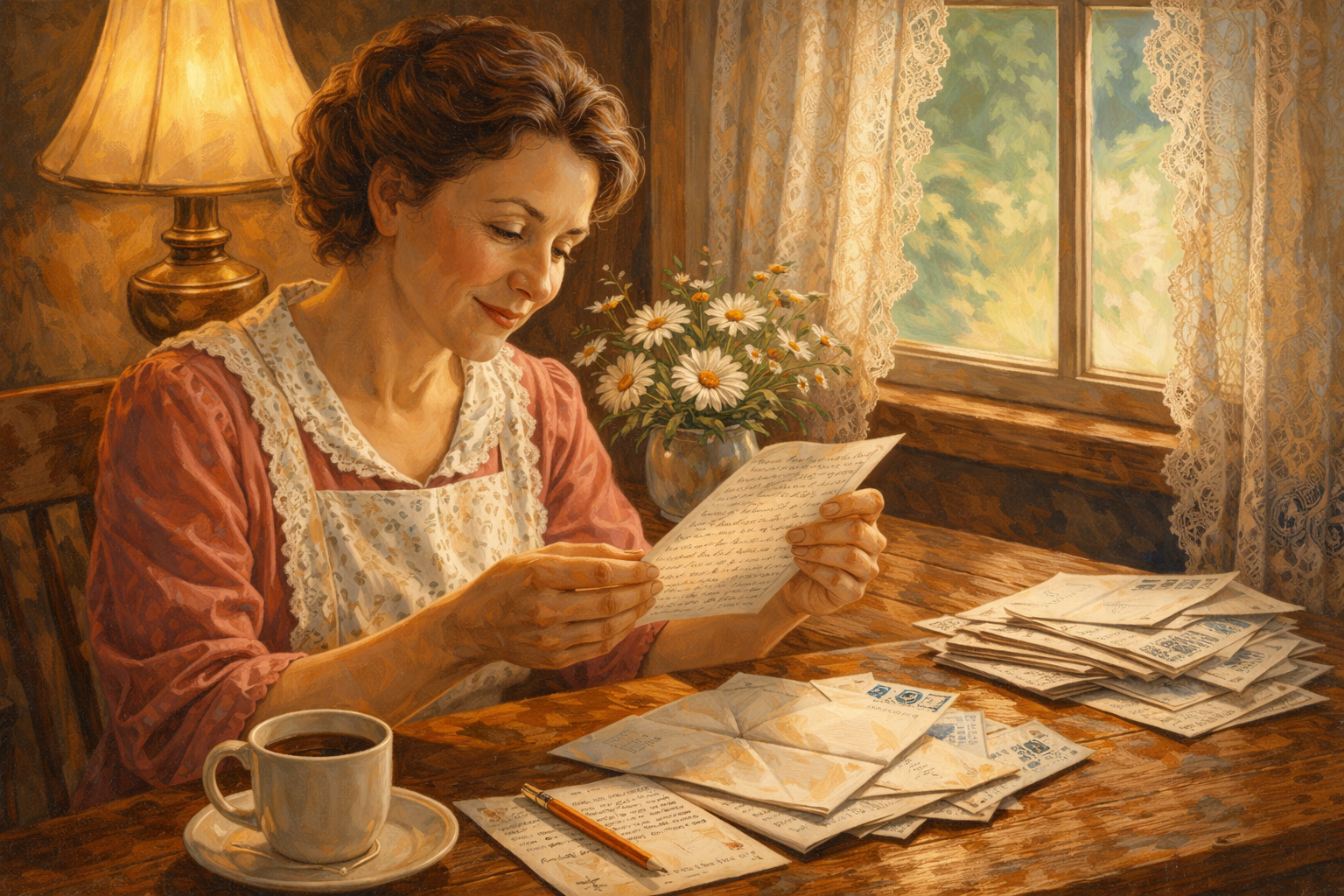

There’s a message that our modern world whispers (or even yells) at women: “Your worth is based on what you do outside the house.” As if the work of the home is secondary—something you do after the important things.
But the Bible paints a very different picture.
From Genesis to the teachings of our Messiah, the home is not treated as some sort of throwaway space. It is treated as a place where life is formed, faith is practiced, and where the next generation learns what God is like by watching how His people live. For a woman who loves Yeshua (Jesus) and desires to walk as He walked, the home isn’t an afterthought, it’s a calling.
Not every woman is married. Not every woman has children. Not every home looks the same. But every woman who belongs to the Lord has been given a sphere of stewardship, some measure of influence, responsibility, hospitality, and order. And for many of us, that sphere begins in the kitchen, the living room, the laundry pile, the budget, the tone of our words, and the way we guard our gates.
So let’s put it simply: a woman’s home is her first ministry—not because it’s small, but because it’s foundational.
Ministry Begins in Small Circles
The Bible never separates “spiritual life” from everyday life. In Torah, the instructions of God are meant to be woven into the normal routine of the day. When you’re sitting in your house, walking by the way, lying down, and rising up.
“These words, which I am ordering you today, are to be on your heart; and you are to teach them carefully to your children. You are to talk about them when you sit at home, when you are traveling on the road, when you lie down and when you get up. Tie them on your hand as a sign, put them at the front of a headband around your forehead, and write them on the door-frames of your house and on your gates.”
—Deuteronomy 6:6–9
That’s not a once-a-week faith. That’s a faith that lives at the breakfast table and everywhere else in the home.
This is one reason the home matters so much: home is where discipleship becomes practical. It’s where forgiveness has to happen for real. It’s where patience is tested. It’s where prayer is either a lifestyle or an emergency flare. It’s where the Word of God is either honored or crowded out.
Now when we talk about “ministry,” many people picture a microphone, a platform, or a public role. But ministry in Scripture is often quiet, steady, and deeply relational. It’s the pouring out of your life in obedience to God for the good of others.
And if you want to see a picture of that kind of ministry, you don’t have to look very far at all. You can look at a woman who fears the Lord and makes her home a place of peace, provision, and instruction.
The Proverbs 31 Woman
Proverbs 31 is often treated like a checklist that leaves women exhausted before breakfast. But it’s not written to discourage you, it’s written to honor the kind of dedication and wisdom that shows up in daily faithfulness.
That woman isn’t just “doing chores.” She is creating stability. She is stewarding resources. She is blessing others. She is thinking ahead. She is working with willing hands. (Proverbs 31:13), providing food for her household (Proverbs 31:15), speaking wisdom and kindness (Proverbs 31:26), and watching over the ways of her house (Proverbs 31:27). And what’s the root of it?
“Charm can lie, beauty can vanish, but a woman who fears Adonai should be praised.”
—Proverbs 31:30
The fear of the Lord isn’t a passing mood. It’s a foundation. It shapes our decisions, it orders our priorities, and it teaches a woman what matters most.
If you’ve ever fed your family when you didn’t feel like it, kept going when no one noticed, prayed over a child’s attitude, or guarded the atmosphere of your home when stress was high, then you have already tasted what Scripture calls wisdom.
“Keepers at home” isn’t a Punishment
Titus 2 is one of those passages that often gets quoted in a way that sounds like a burden instead of a blessing. But Paul is describing something that protects the home from chaos and protects the testimony of God’s people.
Older women are instructed “to Likewise, tell the older women…
“…to behave the way people leading a holy life should. They shouldn’t be slanderers or slaves to excessive drinking. They should teach what is good, thus training the younger women to love their husbands and children, to be self-controlled and pure, to take good care of their homes and submit to their husbands. In this way, God’s message will not be brought into disgrace.“
—Titus 2:4–5
Notice the “why.”
It’s not because women are lesser. It’s because the home is powerful, and when homes are neglected, the fallout is seen by all. A well-ordered, peaceful, faith-filled home becomes a witness.
In a world that is increasingly loud, fractured, and unstable, a home anchored in the Word of God is not old-fashioned, it is countercultural.
Your Home Teaches All the Time
Children (and husbands too) learn what you truly value by what you do.
The biblical instruction in Deuteronomy 6 is not primarily about formal lessons. It’s about a life where God’s instructions are close enough to be talked about naturally. When you make meals, when you correct behavior, when you budget, when you welcome guests, when you rest on Shabbat. Your home becomes a 24/7 living classroom.
According to Paul, Timothy’s sincere faith was lived first in his grandmother and his mother.
“I recall your sincere trust, the same trust that your grandmother Lois and your mother Eunice had first; and I am convinced that you too now have this trust.”
—2 Timothy 1:5
In other words, Timothy’s spiritual formation didn’t begin in a synagogue classroom or on a missionary trip. It began under the influence of women who lived the faith in close quarters.
That is real ministry.
Hospitality is part of Holiness
In Scripture, hospitality isn’t about impressing people. It’s about opening space for the love of God to become action.
What does the bible say about hospitality?
“but don’t forget to be friendly to outsiders; for in so doing, some people, without knowing it, have entertained angels.”
—Hebrews 13:2
“Share what you have with God’s people, and practice hospitality.”
—Romans 12:13
“More than anything, keep loving each other actively; because love covers many sins. Welcome one another into your homes without grumbling. As each one has received some spiritual gift, he should use it to serve others, like good managers of God’s many-sided grace”
—1 Peter 4:8-10
Hospitality is one of the ways that the people of God embody generosity and community.
And where does hospitality usually happen first?
At home.
Around a table.
With what you have. Sometimes simple, sometimes stretched, often imperfect. And that is perfect.
A woman’s home can become a quiet outpost of the Kingdom. A place where someone is fed, listened to, encouraged, prayed with, and reminded that God loves them.
You don’t need a formal ministry title for that. You need a willing heart and an open door.
Order is Not about Perfection
There’s a difference between a home that looks perfect and a home that feels loving and safe.
“for God is not a God of unruliness but of shalom.”
—1 Corinthians 14:33
While admittedly, this verse is in a different context, the principle is still true: God’s ways bring order, calm and peace, not chaos.
A home becomes a ministry when it reflects His character. When it is peaceful, steady, truthful, hospitable, and disciplined.
That doesn’t mean your house will always be spotless. It means you’re cultivating a home that displays:
Forgiveness.
“Bear with one another; if anyone has a complaint against someone else, forgive him. Indeed, just as the Lord has forgiven you, so you must forgive.”
—Colossians 3:13
Gratitude.
“ In everything give thanks, for this is what God wants from you who are united with the Messiah Yeshua.”
—1 Thessalonians 5:18
Speech seasoned with grace and wisdom.
“let your conversation always be gracious and interesting, so that you will know how to respond to any particular individual.”
—Colossians 4:6
Love is action.
“Love is patient and kind, not jealous, not boastful, not proud, rude or selfish, not easily angered, and it keeps no record of wrongs. Love does not gloat over other people’s sins but takes its delight in the truth. Love always bears up, always trusts,
always hopes, always endures.”
—1 Corinthians 13:4–7
Prayer and trust is persistent.
“Don’t worry about anything; on the contrary, make your requests known to God by prayer and petition, with thanksgiving.” —Philippians 4:6
The Scriptures are central.
“Your word is a lamp for my foot and light on my path.”
—Psalm 119:105
Even on laundry day. Even in the grocery store line. Even when the kitchen is a mess.
God Sees the Unseen
Sometimes one of the hardest parts of homemaking is that it can feel invisible or unappreciated. The tasks repeat. The needs return again the next day.
You can spend all day working and still feel like you have “nothing to show for it.”
But the Bible reminds us that God sees your quiet faithfulness.
“Whatever work you do, put yourself into it, as those who are serving not merely other people, but the Lord.”
—Colossians 3:23
And the Messiah Himself teaches that the Father who sees in secret rewards openly.
“Then your tzedakah (works of righteousness) will be in secret; and your Father, who sees what you do in secret, will reward you.”
—Matthew 6:4
If you’re serving your household with sincerity, you’re not wasting your life. You are practicing obedience. You are shaping people.
You are building legacy.
You are doing the kind of work that holds up everything else.
A Home Built on Wisdom
“Every wise woman builds up her home, but a foolish one tears it down with her own hands.”
—Proverbs 14:1
Of course we know that this isn’t talking about literal lumber and drywall. It’s about the atmosphere of the home, the culture of the household.
A woman builds her house with:
Her Words
Her Choices
Her Priorities
Her Example
Her Faith
And when a home is built on the ways of God, it doesn’t just bless the people inside it. It becomes a blessing beyond its walls.
Strong families strengthen their public communities. Faithful homes strengthen faith communities (fellowships or congregations.) Children raised with the Bible and faith become adults who know how to stand.
If you want to disciple the next generation, you don’t start with a stage. You start with a dinner table.
What does “Home as Ministry” Look Like?
It looks like faithfulness with the ordinary tasks.
It looks like choosing words carefully.
“The tongue has power over life and death; those who indulge it must eat its fruit.”
—Proverbs 18:21
Like treating your husband with respect and integrity. Remember the principle that most women want to be loved, while men want to be respected.
“However, the text also applies to each of you individually: let each man love his wife as he does himself, and see that the wife respects her husband.”
—Ephesians 5:33
Whether they are believers or not.
“In the same way, wives, submit to your husbands; so that even if some of them do not believe the Word, they will be won over by your conduct, without your saying anything, as they see your respectful and pure behavior. Your beauty should not consist in externals such as fancy hairstyles, gold jewelry or what you wear; rather, let it be the inner character of your heart, with the imperishable quality of a gentle and quiet spirit. In God’s sight this is of great value.”
—1 Peter 3:1–4
It looks like nurturing children in instruction and discipline that reflects the Lord.
“Fathers, don’t irritate your children and make them resentful; instead, raise them with the Lord’s kind of discipline and guidance.”
—Ephesians 6:4
It’s setting a rhythm of work and rest, especially including Shabbat
“Remember the day, Shabbat, to set it apart for God. You have six days to labor and do all your work, but the seventh day is a Shabbat for Adonai your God. On it, you are not to do any kind of work — not you, your son or your daughter, not your male or female slave, not your livestock, and not the foreigner staying with you inside the gates to your property. For in six days, Adonai made heaven and earth, the sea and everything in them; but on the seventh day he rested. This is why Adonai blessed the day, Shabbat, and separated it for himself.”
—Exodus 20:8–11
It’s practicing hospitality as a lifestyle, not a performance.
“Share what you have with God’s people, and practice hospitality.”
—Romans 12:13
Home as Ministry looks like choosing contentment over comparison.
“Now true religion does bring great riches, but only to those who are content with what they have.”
—1 Timothy 6:6
It is guarding what enters your home, whether it is through media, attitudes, or influences.
“Above everything else, guard your heart; for it is the source of life’s consequences.”
—Proverbs 4:23
This truly is not about perfection. When you fail (because we all do), it looks like repentance, humility, and trying again.
That is ministry, too.
The “Small Things” Matter
Sister, if God has placed you in a season where your world is mostly within four walls, you are not sidelined. You are stationed.
And if your season includes work outside the home, ministry still begins at home. The condition of the home affects the health of the people in it. Your first responsibility is still stewardship. Stewardship of your spirit, your priorities, your relationships, and the environment you’re cultivating.
The world may not applaud homemaking. But heaven recognizes it.
Because a woman who honors God in her home is doing Kingdom work.
She is shaping souls. She is building peace. She is teaching by example. She is preparing a place where faith can grow.
And that, according to Scripture, is not “less than.”
It is foundational.
Prayerful Reflections
I encourage you to take time to pray and go through the following questions. Journal your answers and reflections.
- What is one simple way I can invite the Word of God into my daily home routine this week? (Deuteronomy 6:6–9)
- Where has comparison made me despise my season—and how can I practice contentment instead? (1 Timothy 6:6)
- What “small” act of service in my home could become worship if I did it unto the Lord? (Colossians 3:23)
Father,
Thank You for meeting us in the ordinary places and with what you’ve entrusted to us. Forgive us for the times we’ve believed the lie that what’s unseen is unimportant, or that our value is measured by applause instead of obedience.
Teach us to guard the gates of our hearts and the atmosphere of our households with wisdom, humility, and dedication.
Where our words have been sharp, soften us. Where we’ve been weary, strengthen us. Where we’ve been distracted, refocus us. Give us contentment and a willing spirit to serve “as unto the Lord,” even when no one notices. Let the work of our hands become worship, and let our homes become places of shalom. Let them be anchored in truth, marked by forgiveness, filled with gratitude, and open in hospitality.
And when we fail, lead us quickly to repentance and restore our joy—so we can rise again and keep building what is good.
We ask all of this in the name of Yeshua. Amen.