An introduction to Passover for Christians.
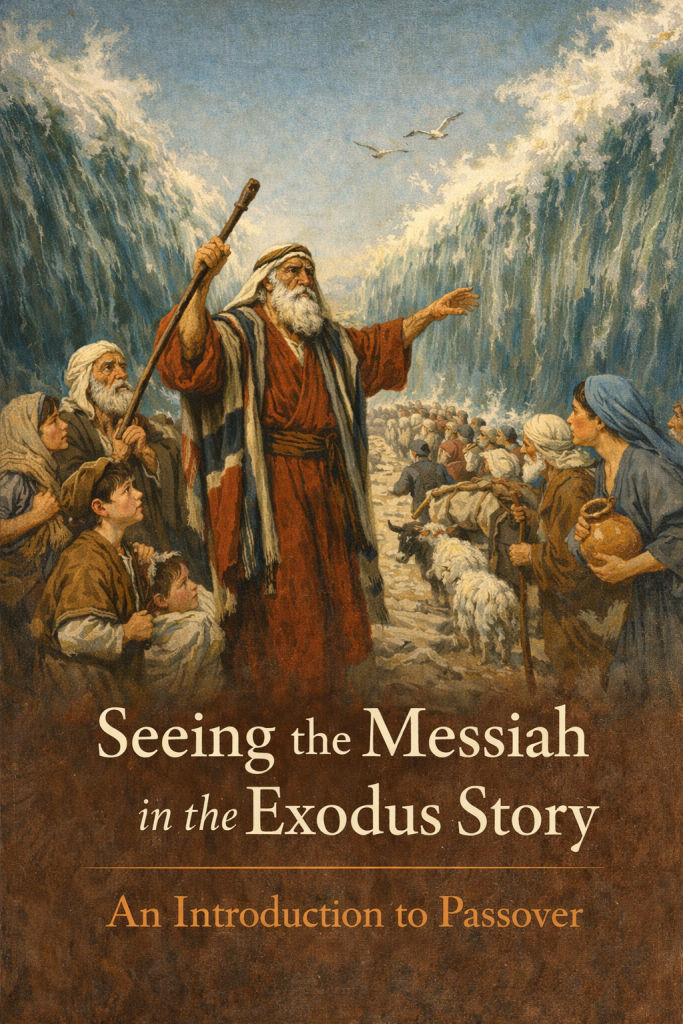
Passover is often treated as “Jewish history,” something beautiful but separate from the life of a Christian believer. But the Bible presents Passover as far more than a memorial of Israel’s deliverance.
It is a God-ordained holy day that teaches redemption, covenant, substitution, and deliverance. And for disciples of Yeshua (Jesus), Passover becomes a profound lens through which we understand the Messiah’s death, the meaning of atonement, and what it looks like to walk in obedience as God’s people.
This study is written for Christians who are new to following the Torah and want to understand what Passover is, why God commanded it, and how the process of Passover points directly to Messiah.
Scripture references for each connection are included for you to study it out. This is not an exhaustive list. I would write an entire book if I showed even close to all of the connections, prophetic imagery and more.
I did not include all of the scripture quotes mentioned. I encourage you to read this alongside your bible and look the passages up along the way.
What Is Passover?
Passover (Hebrew: Pesach) is the first of the LORD’s appointed times (moedim.) It is a commanded memorial of Israel’s deliverance from slavery in Egypt.
It begins with the slaying of the Passover lamb and is immediately followed by the Feast of Unleavened Bread, a seven-day observance. (Leviticus brings them together as one season.)
Passover as an appointed time.
“‘These are the designated times of Adonai, the holy convocations you are to proclaim at their designated times. In the first month, on the fourteenth day of the month, between sundown and complete darkness, comes Pesach for Adonai.”
—Leviticus 23:4–5
Unleavened Bread follows Passover.
On the fifteenth day of the same month is the festival of matzah; for seven days you are to eat matzah. On the first day you are to have a holy convocation; don’t do any kind of ordinary work. Bring an offering made by fire to Adonai for seven days. On the seventh day is a holy convocation; do not do any kind of ordinary work.’”
—Leviticus 23:6–8
It is a foundational story seen in chapters 12 and 13 of Exodus.
Passover is not man-made tradition.
It is a command of God, given before Israel ever left Egypt, teaching His people how redemption works.
The Passover Pattern
Exodus 12 is very specific. God didn’t just rescue Israel. He taught them the process, so they would understand the cost and meaning of deliverance. And in it we can see a gospel-shaped pattern as well.
A Lamb Was Chosen and Set Apart
Each household was to take a lamb and keep it for several days before it was killed:
- Select the lamb on the tenth day: Exodus 12:3
- Keep it until the fourteenth day: Exodus 12:6
- The lamb must be unblemished: Exodus 12:5
The Connection to Messiah: Yeshua is presented as a spotless sacrifice, without defect, appropriate to be offered to God.
- Messiah without sin: 1 Peter 2:22
- The “lamb without blemish”: 1 Peter 1:18–19
- God’s Lamb identified: John 1:29
- Messiah examined/tested and found without guilt (a powerful echo of “unblemished”): Luke 23:4, 14–15
Remember: Before the lamb was slain, it was seen, known, and set apart.
The Lamb Was Slain at the Appointed Time
The whole assembly of Israel was to kill the lamb at twilight (literally “between the evenings”): Exodus 12:6
The Connection to Messiah: The New Testament repeatedly emphasizes that Yeshua died exactly according to God’s plan and timing.
- He was delivered up according to God’s plan: Acts 2:23
- Yeshua is called “our Passover”: 1 Corinthians 5:7
- Yeshua’s death tied directly to Passover season: Luke 22:7–8, 14–15
Passover is one of the clearest places in the bible where God shows us that deliverance requires death.
Just as when Abraham was about to sacrifice his only son to God, and an angel intervened, and God provided the sacrifice (Genesis 22) – God provided the sacrificial life of Yeshua in the place of ours.
The Blood Was Applied
Israel was saved because they obediently applied the blood to the doorposts and lintel of their homes as they were told to do.
- They put blood on the two doorposts and lintel: Exodus 12:7
- Blood was the sign; God passes over: Exodus 12:12–13
- The Destroyer was not permitted to enter: Exodus 12:23
The Connection to Messiah: The covering of Yeshua’s blood over us the basis of protection from the consequences of our sin. A covering of covenant, redemption, and forgiveness.
- Redemption through His blood: Ephesians 1:7
- Justified by His blood: Romans 5:9
- Cleansed by the blood: 1 John 1:7
- A new covenant in His blood: Luke 22:20
Remember: In Exodus, we see that the blood was placed at the entrance of the home. It was visible and public. The Torah teaches that redemption marks a household.
Messiah’s blood likewise marks a new life, a people, and a covenant identity.
You can compare Exodus 12:13 with Romans 10:9–10 as the outward confession of an inward faith.
The Lamb Was Roasted With Fire and Eaten
The lamb was roasted whole and with fire. God commanded Israel to eat the lamb along with unleavened bread and bitter herbs.
- Eat the lamb that night: Exodus 12:8
- Roasted with fire, not raw or boiled: Exodus 12:9
- Eat it in haste, ready to depart: Exodus 12:11
This is very important: Deliverance wasn’t only about the blood on the door. It also involved further obedience.
The Connection to Messiah: Yeshua’s final Passover meal with His disciples (often called “the Last Supper”) is presented in covenant language: Bread, cup, remembrance, and participation.
- Yeshua earnestly desired to eat this Passover: Luke 22:14–15
- Bread as His body given: Luke 22:19
- Cup as the new covenant in His blood: Luke 22:20
- Participation language (communion/fellowship): 1 Corinthians 10:16–17
In the book of Exodus, eating the lamb was an act of faith and relationship: “We belong to the God who redeems.”
In the Gospels, Yeshua uses the Passover to teach: “This redemption is now fulfilled in Me.”
Unleavened Bread: A Called-Out Life
Immediately after the Passover comes Unleavened Bread. Israel was commanded to remove leaven from their homes and eat unleavened bread for seven days.
- Eat unleavened bread for seven days: Exodus 12:15
- Remove the leaven; cut off if refusing: Exodus 12:19–20
- Unleavened Bread as an appointed feast: Leviticus 23:6
The Connection to Messiah: Paul explicitly applies Passover/Unleavened Bread to the sanctification of a believer’s life.
Leaven often symbolizes corruption that permeates. It is something small that if left unchecked…spreads!
“Get rid of the old hametz (leavening), so that you can be a new batch of dough, because in reality you are unleavened. For our Pesach lamb, the Messiah, has been sacrificed. So let us celebrate the Seder not with leftover hametz, the hametz of wickedness and evil, but with the matzah of purity and truth.
—1 Corinthians 5:7–8
Passover is not only about being forgiven. It’s about being set free to walk differently.
- Freed from slavery to serve God: Exodus 7:16; 8:1
- Redeemed to be holy: 1 Peter 1:14–16
The Firstborn and the Principle of Substitution
The tenth plague was death of the firstborn. Israel’s firstborn lived because a substitute died and blood marked the home.
- Death of the firstborn: Exodus 12:29–30
- Blood as protection: Exodus 12:13
Immediately afterward, God claims Israel’s firstborn as His own, showing redemption creates ownership. It is a covenant of belonging.
- Consecrate the firstborn to the LORD: Exodus 13:1–2, 11–15
The Connection to Messiah: Yeshua is called God’s firstborn and unique Son in several ways, and His death is presented as the substitutionary act that rescues others.
- God gave His Son: John 3:16
- Messiah as the firstborn (preeminent heir): Colossians 1:15–18
- Substitution language: Isaiah 53:4–6, 10–12
- Ransom / redemption: Mark 10:45
Passover teaches a sobering truth: Judgment is real, but God provides a covering.
The question in Egypt wasn’t, “Are you Israelite or Egyptian?” The question was: Is there blood on this house? – Exodus 12:13
Why Christians Should Care About Passover
Passover is essentially “the gospel according to Exodus”
Before the wilderness and before Israel even learned how to live as a nation, God taught them the meaning of redemption:
- Salvation by God’s power: Exodus 6:6–7
- Remember and teach your children: Exodus 12:24–27; 13:8
Yeshua didn’t come along and erase the Passover. He fulfilled its prophetic and redemptive meaning. He also deepened our understanding of it.
- Yeshua did not come to abolish Torah, but to fulfill: Matthew 5:17–19
- Messiah opened the Scriptures to show what was written about Him: Luke 24:27
For believers who are new to living out and walking in the Torah, Passover becomes a discipleship doorway. You begin to see that God’s instructions are not burdensome, antiquated rituals. They are revelations of His character and His plan.
- God’s commandments are not burdensome: 1 John 5:3
- Torah as instruction that blesses: Psalm 1:1–2; Deuteronomy 10:12–13
Practical Ways to Observe Passover Season Biblically
A wise approach for Torah-observant Christians new to this is to start with Scripture first.
Keep the focus on God’s deliverance and Yeshua the Messiah as our Passover (1 Corinthians 5:7)
Read the full account: Exodus 12–13, and the Gospel Passover passages: Luke 22, John 18–19.
Clean out leaven as a household discipleship exercise: Exodus 12:15 (and reflect on 1 Corinthians 5:7–8).
Make the week about remembrance and teaching your children: Exodus 12:26–27; 13:8.
Have the meal focused on the Passover meaning: Luke 22:19–20; 1 Corinthians 11:23–26.
Focus on gratitude for deliverance and commitment to obedience: Exodus 20:2; Deuteronomy 5:15.
What About the Passover Seder?
First, let me explain what a Seder is.
A seder is a special meal and service held at the beginning of Passover in which the story of Israel’s deliverance from slavery in Egypt is retold. It is done through Scripture, symbolic foods, prayers, and remembrance. We primarily know about it from the Jewish community.
The word seder means “order,” because the meal follows a set pattern that helps participants reflect on God’s redemption, His covenant faithfulness, and the meaning of freedom. And at the same time it passes these truths on to the next generation.
“When your children ask you, ‘What do you mean by this ceremony?’ say, ‘It is the sacrifice of Adonai’s Pesach [Passover], because [Adonai] passed over the houses of the people of Isra’el in Egypt, when he killed the Egyptians but spared our houses.’”
—Exodus 12:26-27a
Many believers ask, “Should we do a Seder?”
The bible commands Passover and Unleavened Bread, but the modern Seder includes later traditions developed over time. Some parts closely echo biblical themes; others are maybe questionable additions, like the hard-boiled egg which is possible attributed to the time of the Babylonian captivity.
If you do use a Seder guide, treat it as a teaching tool, not equal to Scripture (Deuteronomy 4:2). You could use it (or them) to come up with your own version for your family or fellowship.
Remember, the whole point is to Remember what God has done and Teach the next generation.
You can find many “Christian Seders” online. I will provide a few links at the bottom of this article.
Final Thoughts
Passover (Pesach) is not about “being Jewish.” It is about becoming biblical. It is about learning the redemption story the way God told it.
Pesach teaches that salvation is deliverance by substitution, initiated by God, received by faith, and followed by a called-out life.
When you read the Passover account with Messiah in mind, your worship deepens.
You begin to see that the Exodus was never just ancient history. It was a prophetic portrait of the Lamb who takes away the sin of the world (John 1:29), the Passover who was sacrificed for us (1 Corinthians 5:7), and the Redeemer who leads His people from bondage into His covenant life.