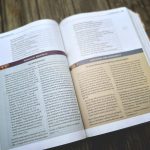

A routine I began many years ago, was to get up before the sun, before the household stirred, and begin the day with the Word and the Father.
I set my coffee maker up the night before, and just as I am waking each morning, it finishes brewing. I’m greeted with the wonderful aroma of the freshly brewed coffee.
I get a cup, grab my bible and settle down in the recliner—with a dog or two curled up beside my feet— and dive into the Word.
In a busy household, silence is rare. Once the household awakens, the day quickly fills with noise, needs, and responsibilities. For myself and many other believers, the most meaningful time with God happens before all of that begins—early in the morning, while the house is still quiet.
Scripture speaks often about this practice, not as a command, but as a wise pattern.
From the earliest pages of the Bible, morning is presented as a time set apart for meeting with God. David writes that he lifts his voice to the LORD in the morning and waits expectantly.
“Adonai, in the morning you will hear my voice; in the morning I lay my needs before you and wait expectantly.” —Psalm 5:3(4)
The morning is not merely a convenient time—it is a deliberate offering of first attention and first affection.
Yeshua (Jesus) Himself modeled this rhythm.
The Gospels repeatedly show Yeshua rising early to pray, often while it was still dark, before the crowds and demands of the day pressed in.
“Very early in the morning, while it was still dark, Yeshua got up, left, went away to a lonely spot and stayed there praying.”
—Mark 1:35
This was not because His ministry was unimportant, but because communion with the Father came first. Even Yeshua, with all that awaited Him, chose quiet before activity.
This choice reveals something essential: spiritual clarity precedes daily responsibility.
Beginning the day with prayer and Scripture anchors the heart before the world begins making demands. Instead of reacting to the day, believers are invited to receive direction first. Scripture describes God’s Word as light—guidance that illuminates the path ahead.
“Your word is a lamp for my foot and light on my path.”
—Psalm 119:105
When that light is received early, it shapes everything that follows. There is also a humility in rising early to meet with the Father.
Scripture often connects early seeking with earnest desire. Isaiah declares that those who seek the the Father early will find Him
“My soul desires you at night, my spirit in me seeks you at dawn; for when your judgments are here on earth, the people in the world learn what righteousness is.”
—Isaiah 26:9
Proverbs describes wisdom as something that rewards those who seek it diligently, not casually.
“I love those who love me; and those who seek me will find me.” —Proverbs 8:17
Early mornings aren’t about discipline for discipline’s sake—they are about attentiveness and intentionality.
For parents and homemakers, early mornings offer a rare gift.
Before the children awaken and spouses need attention, there is space to listen rather than respond. Prayer becomes less interrupted. Scripture is read more slowly. The heart is shaped before it is tested. This quiet time becomes a well from which patience, wisdom, and grace are drawn throughout the day
“If you entrust all you do to Adonai, your plans will achieve success.” —Proverbs 16:3
It’s important to note that the Scriptures never present early rising as a measure of righteousness. This is not about earning favor or comparing devotion. God honors faithfulness in every season of life, including even the seasons of exhaustion or disrupted sleep.
“Just as a father has compassion on his children, Adonai has compassion on those who fear him. For he understands how we are made, he remembers that we are dust.” —Psalm 103:13–14
But when early mornings are possible, they offer something uniquely formative.
Starting the day with God also sets an example—sometimes unseen, but deeply influential. Children may not witness the prayers spoken in the quiet, but they experience the fruit: steadiness, gentleness, and discernment. Scripture describes this kind of faith as one that is lived before it is taught.
“These words, which I am ordering you today, are to be on your heart; and you are to teach them carefully to your children. You are to talk about them when you sit at home, when you are traveling on the road, when you lie down and when you get up.” —Deuteronomy 6:6–7
Morning prayer does not eliminate difficulties, but it prepares the heart to meet them.
Morning Scripture does not remove responsibilities, but it brings order to them.
Prayerful Reflections
We encourage early mornings not as a rule, but as an invitation. An invitation to give the Father the first moments of the day rather than the leftovers. An invitation to listen before speaking, to receive before giving, and to be rooted before being stretched.
Whether the morning is long or brief, elaborate or simple, the heart posture matters more than the hour.
God meets those who seek Him—not because of the clock, but because of the heart.
“When you seek me, you will find me, provided you seek for me wholeheartedly” —Jeremiah 29:13
Walking in Torah means learning to value quiet faithfulness—those unseen moments that shape visible fruit. Rising early to pray and read Scripture is not about escaping the day ahead. It is about entering it grounded, attentive, and aligned with the Father who walks with us through every hour of it.