The Torah — also known as God’s Law or Instructions — was given as a gift meant to lead people into life, restoration, and relationship with God.
Scripture tells us that God’s instruction is good, life-giving, and is meant to be taught with care. Because of this, how the Torah is handled matters just as much as what is taught.
Something that I have witnessed since coming to the fullness of God’s Word, is a phenomenon many refer to as “Torah Terrorists.” I have used that term myself, but now I have dubbed another name for these people.
“Torah-thoritarians.”
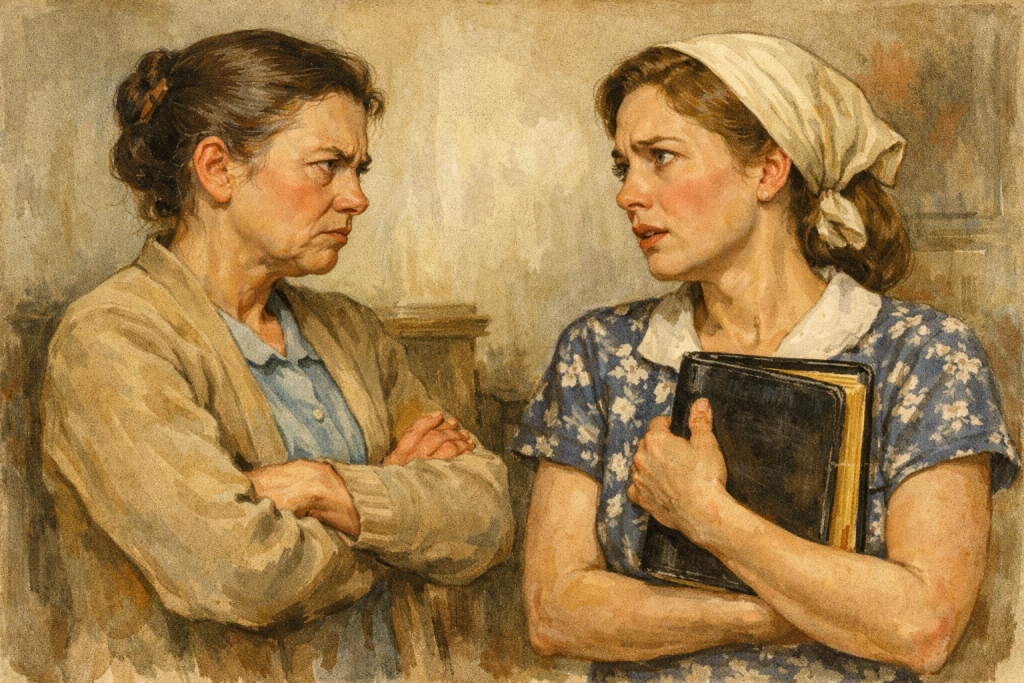
They are a specific — can we call them a sect? — of Torah Observant, or Torah Pursuant Christians who take the Torah, turn it into a weapon and beat people over the head with scriptures.
They are not known by their love for God’s instruction, but by the way they wield the Torah against other believers who don’t see things exactly the way they do, or simply haven’t been shown the fullness of the Torah, yet. Their words are sharp, their tone condemning, and their methods driven by hurt, control, and superiority rather than humility or care for the souls of others.
Instead of inviting repentance, growth, or deeper faithfulness, they demand instant conformity and use Scripture to shame, intimidate, or silence others. Honestly, it is what makes some people think that Torah observance is a cult.
In their hands, Torah becomes a tool for domination rather than discipleship.
Why are they Torah-thoritarians?
I have a theory. My theory on why Torah-thoritarians are the way they are — and I think this makes sense — goes back to grief.
If you aren’t familiar with the stages of grief, they are denial, anger, bargaining, depression and acceptance. I believe that for many, when they have come from traditional Christianity and the Holy Spirit shows them more – that they actually go through a grief process.
I can look back at my own journey of faith, walking this walk and see it in myself. I will share the stages, and how I can see them aligning with what a believer goes through.
The Five Stages of Grief – Torah Edition
Denial – “No, that can’t be true! My pastor would never teach something that wasn’t right! He’s a great pastor, he went to seminary! He studies the bible all the time! I love God.”
They’ll look for any excuse to defend their beliefs and traditions, no matter the cost, no matter the way they have to twist themselves and scripture into a pretzel to make it fit.
Anger – This is a key stage. They understand that yes, the Torah is true and it really is for all of God’s people. But now that the denial is over, they are ANGRY.
You see frustration, resentment, or rage—sometimes directed at their pastor, God, “Why did they lie to me!?” Maybe at all of Christianity in general or society for enabling “the great lie!”
Bargaining – “Okay, yes, the Torah is true and everlasting…but do I really need to give up ____? I’ll stop doing Easter, but can I still eat bacon? Can I do some of the Torah and skip what I don’t want?” This is the one-foot-in-one-foot-out stage.
Depression – Deep sadness, as the reality of the loss settles in. A phase of wishing they were still ignorant and life was simple…because they can’t unlearn what they know. But now they are also sad about all the time that was wasted. All the beautiful Feasts of God they had been missing out on all this time – replaced with cheap substitutions.
Maybe they mourn the fact that they realized all this after their children were grown and missed the opportunity to raise their children up in the ways of God in the fullness that they now understand. “If only I had known this then!” The list of “regrets” and sadness goes on.
Acceptance – Life begins to move forward. No longer consumed by all the hurt and anger of the past, but living life in Torah to the fullest. No longer blaming the pastor or anyone else for “lying” when they had had their own bibles in their hand the whole time. Knowing there was no excuse, because they could have read it for themselves.
At this phase, I see an understanding and gratefulness for “the Church” getting them to where they are today. For being a stepping stone on the path of their faith journey.
They’re Stuck
When you look at the stages of grief, I believe that the Torah-thoritarians are stuck in the anger phase. You see this in the actual grief of the loss of a loved one.
A very dear friend of mine suffered an incredible and tragic loss a few years ago. Since then she has felt a calling to become a grief coach, and help those who suffer loss, to move forward.
I talked to her about this theory of mine, and she agreed. She has seen people – and I think we all have – who suffer some sort of loss or tragedy, and they never recover. They get “stuck” in one of the phases and never move forward in their healing.
They can become hurtful, hateful and toxic.
I fully believe that the Torah-thoritarians are just that. They are stuck in the “anger phase” and take it out on anyone and everyone they meet that don’t see things exactly like they do. And sadly, they tend to be the loudest, most vocal and condemning group of all.
You’ll see them at Christmas or Easter time, trashing people in their Instagram comments or on Facebook for celebrating the pagan holidays and insulting God, serving Satan, and on and on. They act as though all Christians should already know all these things and seem forget that they too were once ignorant. There is no grace, mercy or humility.
Sadly, in their stuck, unhealthy stage they are becoming tools of the Enemy.
Yes! The Torah of God is true, good, life! But the behavior of the Torah-thoritarians completely turn people against even hearing what they are saying or typing.
The fruit they are presenting to the world is poisonous and toxic. Instead of drawing people to the Torah, they are driving people away.
Yes! What they may be saying may be true and accurate. But we can speak the truth in kindness and love. We can show mercy and compassion and be gentle in how we teach and share with others.
When Torah-thoritarians lash out, it only causes defensive walls to be raised. Negotiations are over.
The result is, “If those are Torah Observant Christians, I don’t want anything to do with them.”
Faithful Correction vs. Weaponized Torah – There’s a big difference.
Faithful correction flows from love and humility. It is patient, measured, and aware of human weakness. Its goal is restoration, not humiliation.
It seeks to build up, not to win arguments. Faithful correction recognizes that obedience grows over time and that God Himself is gentle with those who are learning to walk in His ways.
“Or perhaps you despise the riches of his kindness, forbearance and patience; because you don’t realize that God’s kindness is intended to lead you to turn from your sins.”
—Romans 2:4
“Brothers, suppose someone is caught doing something wrong. You who have the Spirit should set him right, but in a spirit of humility, keeping an eye on yourselves so that you won’t be tempted too.” —Galatians 6:1
“Adonai is good, and he is fair; this is why he teaches sinners the way to live, leads the humble to do what is right and teaches the humble to live his way.”—Psalm 25:8-9
Abusive or weaponized Torah use, on the other hand, relies on fear, shame, and superiority.
It uses Scripture as a club rather than a guide, demanding instant perfection while offering little to no mercy. Instead of pointing people toward repentance and hope, it crushes the spirit and pushes others away from both the `Torah and the God who gave it.
Words matter. Speech matters.
“Idle talk can pierce like a sword, but the tongue of the wise can heal.” — Proverbs 12:18
Scripture warns us that it is possible to speak truth without love—and when that happens, even correct words can cause harm. Torah was never meant to be enforced through intimidation or pride.
Yeshua consistently rebuked those who burdened others while refusing to carry the weight themselves, reminding us that God desires mercy, not sacrifice.
“They tie heavy loads onto people’s shoulders but won’t lift a finger to help carry them.” —Matthew 33:4
“For what I desire is mercy, not sacrifices, knowledge of God more than burnt offerings.” — Hosea 6:6
“As for you, go and learn what this means: ‘I want compassion rather than animal-sacrifices.’ For I didn’t come to call the ‘righteous,’ but sinners!” — Matthew 9:13
We are not meant to become “Burden-Makers.”
Remember, when the formerly pagan gentiles were turning from their wicked ways, coming to God through Yeshua, they didn’t know a thing about the Torah. Did the apostles and other early believers expect them to know all the things instantly? Of course not!
We see in Acts 15, that the apostles had to have a meeting and make a decision about what to do with the new gentile believers.
They gave them a foundation for baby Christians, and then gave them the time to learn everything else, as it was taught every week.
“Therefore, my opinion is that we should not put obstacles in the way of the Goyim who are turning to God. Instead, we should write them a letter telling them to abstain from things polluted by idols, from fornication, from what is strangled and from blood. For from the earliest times, Moshe has had in every city those who proclaim him, with his words being read in the synagogues every Shabbat.” — Acts 15:19-21
I can hear it now, “But Yeshua/Jesus braided whips and whipped people, calling them names and ran them out of the Temple courtyard!”
Yes, he did. But we weren’t told to do that. We aren’t Yeshua. He was filled with righteous anger, but he wasn’t running people away from Torah. He was angry at a religious system that had perverted Torah in the name of God.
We are told…
“Be angry, but don’t sin” —Ephesians 4:26
We are admonished as believers to bear good fruit as a sign of Who we belong to.
“But the fruit of the Spirit is love, joy, peace, patience, kindness, goodness, faithfulness, humility, self control. Nothing in the Torah stands against such things.” —Galatians 5:22-23
“I am giving you a new command: that you keep on loving each other. In the same way that I have loved you, you are also to keep on loving each other. Everyone will know that you are my talmidim by the fact that you have love for each other.” — John 13:34-35
We can speak the truth. We can share the good news of the gospel, but we have to do all things with love, mercy and compassion.
“I may speak in the tongues of men, even angels; but if I lack love, I have become merely blaring brass or a cymbal clanging. I may have the gift of prophecy, I may fathom all mysteries, know all things, have all faith — enough to move mountains; but if I lack love, I am nothing.” — 1 Corinthians 13:1-2
No one wants to listen to blaring brass of clanging symbols. They hear that and they will cover their ears to protect them from the painful sounds and run away.
All throughout the Scriptures we see a running theme, over and over about how we treat and speak to others. What is life-giving and what drives away.
“Pleasant words are like a honeycomb, sweet to the taste and healing for the body.”
— Proverbs 16:24
Torah walked out in the Spirit produces humility, compassion, and fruit. When love is absent, something essential has been lost—no matter how accurate the teaching may sound.
We speak truth in kindness, the Holy Spirit is what brings understanding and conviction. We can not put ourselves in that position.
It all simply boils down to this:
- Faithful correction invites repentance and growth.
- Weaponized Torah demands compliance and leaves wounds.
Speak the Truth of the Torah— but do it in Love.
One Last Thing
I can not end this without addressing the condition of the “Torah-thoritarians.”
Returning to the topic of the stages of grief, they are used to address many things, usually those suffering a great loss. But originally they weren’t for the survivors, but for the dying.
The stages of grief were the work of Elisabeth Kübler-Ross who was working with terminally ill patients. She introduced the five stages—Denial, Anger, Bargaining, Depression, Acceptance—in her 1969 book On Death and Dying. Originally, they were developed to describe the emotional experience of people who were dying, not those grieving a loss.
When you think of that context, it makes this so much more understandable.
When we come to Yeshua, come to Christ, we die to ourselves and become new creatures. We are like dead men walking. So when a person comes to the anger stage of being terminally ill…and they get stuck… it is no wonder they exude an offensive stench. They are like the walking dead.
In the end, those who wield the Torah like a weapon are likely not just driven by zealousness alone. But likely, they are driven by pain and hurt. Like the terminally ill patient who lashes out in anger, they are responding to a loss they have not yet learned how to name or cope with. A loss of the spiritual framework that once made the world feel solid and sure.
Some are stuck in denial, unable to see how their methods wound. Some remain in anger, guarding themselves with sharp edges. Others bargain endlessly, convinced that stricter rules and louder rebukes will make themselves feel better. These are not marks of spiritual maturity. They are signs of unresolved hurt.
It goes right back to the old saying, “Hurt people, hurt people.”
Understanding this does not excuse the harm caused by harsh words or venomous “correction.” The Torah was never given to crush the bruised reed or silence the humble heart. But recognizing the grief beneath the aggression allows us to respond differently—to refuse to mirror their hostility, and instead stand rooted in truth, restraint and compassion. But above all, to pray for their healing!
Prayerful Reflections
Walking in the ways of the Torah calls us to something better. It calls us to compassion without compromise, to correction without cruelty. We can hold firm to Scripture while refusing to weaponize it. We can speak truth without becoming toxic.
And perhaps most importantly, we can remember that grief, when met with patience and love, does not last forever. Some who wound today may yet find healing from the Father tomorrow. Until then, remain committed to a love that restores, and pray for the hurting – including and especially our brothers and sisters who are stuck.
He told him, “‘You are to love Adonai your God with all your heart and with all your soul and with all your strength.’ This is the greatest and most important mitzvah. And a second is similar to it, ‘You are to love your neighbor as yourself.’ — Matthew 22:37-39