Learn what the Feast of Trumpets means for Christians, its connection to the Day of the Lord and Yeshua’s return, and simple biblical ways to celebrate Yom Teruah.
For many Christians, the biblical feast days can feel unfamiliar at first. They may sound like something that belongs only to ancient Israel or to Jewish tradition, but when we open the Scriptures, we find that God Himself established these appointed times and called them His feasts.
“Tell the people of Isra’el: ‘The designated times of Adonai which you are to proclaim as holy convocations are my designated times.”
— Leviticus 23:2
One of the most curious of these appointed times is the Feast of Trumpets, also known as Yom Teruah or in modern Judaism, Rosh Hashanah.
Unlike Passover or the Feast of Unleavened Bread, the bible gives us very little explanation about what happens on this day. We are told when it occurs, it is a Sabbath rest, there is to be a holy gathering, and that it is marked by the sounding of trumpets or a loud blast. That’s it.
But when we begin comparing the imagery of Yom Teruah with the prophetic passages about the Day of the Lord, the meaning becomes much more interesting.
The Feast of Trumpets carries the prophetic symbolism of awakening, warning, gathering, judgment, kingship, and the return of the Messiah.
For followers of Yeshua, it is a beautiful appointed time to remember what God has already done, but also looking forward to what is to come!
We have previously looked at the symbolism of the spring feasts, and how they all point to Yeshua’s first coming. The Feast of Trumpets kicks off the fall feasts, and they hold just as much prophetic meaning.
What Is the Feast of Trumpets?
The Feast of Trumpets is described in Leviticus 23.
“Adonai said to Moshe, ‘Tell the people of Isra’el, “In the seventh month, the first of the month is to be for you a day of complete rest for remembering, a holy convocation announced with blasts on the shofar.”’”
— Leviticus 23:23–24
Numbers gives us similar instructions.
“‘In the seventh month, on the first day of the month, you are to have a holy convocation; do not do any kind of ordinary work; it is a day of blowing the shofar for you.”
— Numbers 29:1
The biblical name most commonly associated with this day is Yom Teruah.
Yom means “day.”
Teruah refers to a shout, alarm, trumpet blast, or loud sound.
So Yom Teruah can be understood as the Day of Blowing, the Day of Shouting, or the Day of the Trumpet Blast.
It falls on the first day of the seventh biblical month.
This alone makes Yom Teruah unique among the appointed times. It is the only feast that begins on the first day of a biblical month.
Because biblical months are connected to the lunar cycle, the arrival of the seventh month has traditionally been associated with the appearance of the new moon.
The day begins when the seventh month begins, and the people of God are called to stop their ordinary work, gather together, and remember with the sound of the trumpet.
What Does the Trumpet Mean in Scripture?
To understand the Feast of Trumpets, it helps to look at how trumpets and shofars are used throughout the Bible.
The trumpet was not merely a musical instrument, it carried a message.
Trumpets were used to gather the people.
“Make two trumpets; make them of hammered silver. Use them for summoning the community and for sounding the call to break camp and move on.”
— Numbers 10:2
They were used to sound an alarm.
“When you sound an alarm, the camps to the east will commence traveling.”
— Numbers 10:5
They were used in warfare.
“When you go to war in your land against an adversary who is oppressing you, you are to sound an alarm with the trumpets; then you will be remembered before Adonai your God, and you will be saved from your enemies.”
— Numbers 10:9
They were used in worship and celebration.
“Also on your days of rejoicing, at your designated times and on Rosh-Hodesh, you are to sound the trumpets over your burnt offerings and over the sacrifices of your peace offerings; these will be your reminder before your God. I am Adonai your God.”
— Numbers 10:10
The shofar was also used in connection with the presence and revelation of God.
At Mount Sinai, when Adonai descended upon the mountain, the people heard the sound of a trumpet growing louder and louder.
“As the sound of the shofar grew louder and louder, Moshe spoke; and God answered him with a voice.”
— Exodus 19:19
So the trumpet carries several biblical meanings at the same time:
- a call to assemble,
- a warning,
- an announcement,
- preparation for battle,
- the presence of God,
- and the proclamation of a king
Culturally, it was also the announcement of a groom arriving for his bride. But we will discuss that another time.
All of those themes become important when we begin looking at the prophetic “Day of the Lord.”
The Feast of Trumpets and the Day of the Lord
Throughout the prophets, the “Day of the Lord” is described as a future time when God intervenes decisively in human history.
It is a day of judgment and darkness. It is a day when the nations of the worlds are shaken. It is also a day when God gathers His people and establishes His rule.
And again and again, the prophets connect that day with the sound of a trumpet.
Joel writes:
“Blow the shofar in Tziyon! Sound an alarm on my holy mountain! Let all living in the land tremble,
for the Day of Adonai is coming! It’s upon us!”
— Joel 2:1
Zephaniah describes the Day of the Lord this way:
“That Day is a Day of fury,
a Day of trouble and distress,
a Day of waste and desolation,
a Day of darkness and gloom,
a Day of clouds and thick fog,
a Day of the shofar and battle-cry
against the fortified cities
and against the high towers [on the city walls].”
— Zephaniah 1:15–16
The imagery here is unmistakable.
The trumpet is sounding, an alarm is being raised, the people are being warned to prepare and the King is coming!
The Trumpet and the Return of Yeshua
The prophetic imagery becomes even stronger in the New Testament.
Yeshua Himself described His return with the sound of a trumpet.
“He will send out his angels with a great shofar; and they will gather together his chosen people from the four winds, from one end of heaven to the other.”
— Matthew 24:31
Paul gives the same visual:
“For the Lord himself will come down from heaven with a rousing cry, with a call from one of the ruling angels, and with God’s shofar; those who died united with the Messiah will be the first to rise”
— 1 Thessalonians 4:16
And again:
“It will take but a moment, the blink of an eye, at the final shofar. For the shofar will sound, and the dead will be raised to live forever, and we too will be changed.”
— 1 Corinthians 15:52
These scriptures point to the same themes we see in Yom Teruah.
- the Trumpet Sounds
- the People of God are Gathered
- the Dead are Raised
- the King Appears
And on this day, the world enters a decisive moment in God’s prophetic plan.
This is why many believers see the Feast of Trumpets as a prophetic picture of the return of Messiah.
We should be careful not to claim more than Scripture says. The Bible does not explicitly state that Yeshua must return on the Feast of Trumpets. But the parallels are difficult to ignore.
Yom Teruah teaches us to live as people who are listening for the trumpet at all times.
A Day of Awakening
The trumpet is also a call to wake up.
Throughout Scripture, spiritual sleep is a picture of complacency.
Paul writes:
“Besides all this, you know at what point of history we stand; so it is high time for you to rouse yourselves from sleep; for the final deliverance is nearer than when we first came to trust.”
— Romans 13:11
The Feast of Trumpets gives us a yearly opportunity to ask ourselves if we are awake spiritually? Are we watching? Are we prepared for the return of the King? Have we become distracted by ordinary life?
Yeshua repeatedly told His disciples to remain alert.
“So stay alert, because you don’t know on what day your Lord will come.”
— Matthew 24:42
Yom Teruah reminds us that the people of God should never live as though this present world will continue forever.
The trumpet will sound.
The King will return.
And we are called to be ready.
A Day of Remembrance
Leviticus calls the Feast of Trumpets a day of remembrance.
Biblical remembrance is not merely thinking about something that happened in the past. It is to act upon something and deliberately bring God’s faithfulness back to the center of our attention.
Throughout the year, it is easy to become absorbed in work, family responsibilities, worries, money or even the news.
But God’s appointed times interrupt our routines and they remind us that all of history, our present and our futures belong to God.
Yom Teruah calls us to remember that God keeps His promises. That He rules over nations. That our Messiah, Yeshua will return. That the resurrection is coming and the Kingdom of God will be established.
Those are things worth remembering and they should direct our actions as well.
A Day of the King
Trumpets were also associated with the coronation of kings.
When Solomon was crowned king, the trumpet was sounded.
“There Tzadok the cohen and Natan the prophet are to anoint him king over Isra’el. Sound the shofar and say, “Long live King Shlomo!’”
— 1 Kings 1:34
The sound of the trumpet announced that the king had taken his throne.
That prophetic picture gives Yom Teruah another powerful meaning for believers in Yeshua.
We are waiting for the return of the rightful King of the whole world.
Revelation describes the kingdoms of the world becoming the Kingdom of Messiah.
“The seventh angel sounded his shofar; and there were loud voices in heaven, saying, “The kingdom of the world has become the Kingdom of our Lord and his Messiah, and he will rule forever and ever!”
— Revelation 11:15
Notice that just before this proclamation the seventh angel sounds a trumpet.
The trumpet announces the reign of the King.
Is the Feast of Trumpets the Jewish New Year?
Today in Judaism, the Feast of Trumpets is commonly called “Rosh Hashanah,” meaning “head of the year” and it is celebrated as the civil new year. This tradition is understood to be a carryover from their Babylonian captivity, just as the names of the months.
However, Scripture does not call Yom Teruah the biblical New Year.
According to Exodus 12, the first biblical month begins in the spring.
“You are to begin your calendar with this month; it will be the first month of the year for you.”
— Exodus 12:2
Yom Teruah takes place on the first day of the seventh month, not the first month.
For Christians seeking to understand the appointed times from Scripture, it is helpful to distinguish between the biblical instructions and later man-made traditions that developed around them.
Those traditions can sometimes be historically interesting, but they should never replace God’s instructions and what Scripture actually says.
How Can Christians Celebrate the Feast of Trumpets?
For believers who are new to the appointed times, celebrating Yom Teruah does not need to be complicated.
There is no biblical command requiring elaborate ceremonies.
Scripture gives us a simple framework:
- Rest
- GatherTogether
- Remember
- and Blow Shofars!
Blowing Shofars
If you own a shofar, blow it! It does not need to sound perfect because it is not musical performance.
The blast itself is the reminder.
The sound can represent the call to wake up, gather, remember, and prepare for the coming King.
If you do not own a shofar, you can still observe the feast. Some people like to play recordings of shofars being blown.
Focusing on Scriptures
Spend time reading scriptures that connect the trumpet with the Day of the Lord and the return of Messiah.
A few you might to include are:
- Leviticus 23:23–25
- Numbers 29:1–6
- Exodus 19
- Joel 2
- Zephaniah 1
- Matthew 24
- 1 Thessalonians 4
- 1 Corinthians 15
- Revelation 11
Those scriptures can help connect the appointed time with the larger story of God’s plan of redemption.
A Special Gathering
Leviticus calls the day a holy convocation, or sacred gathering.
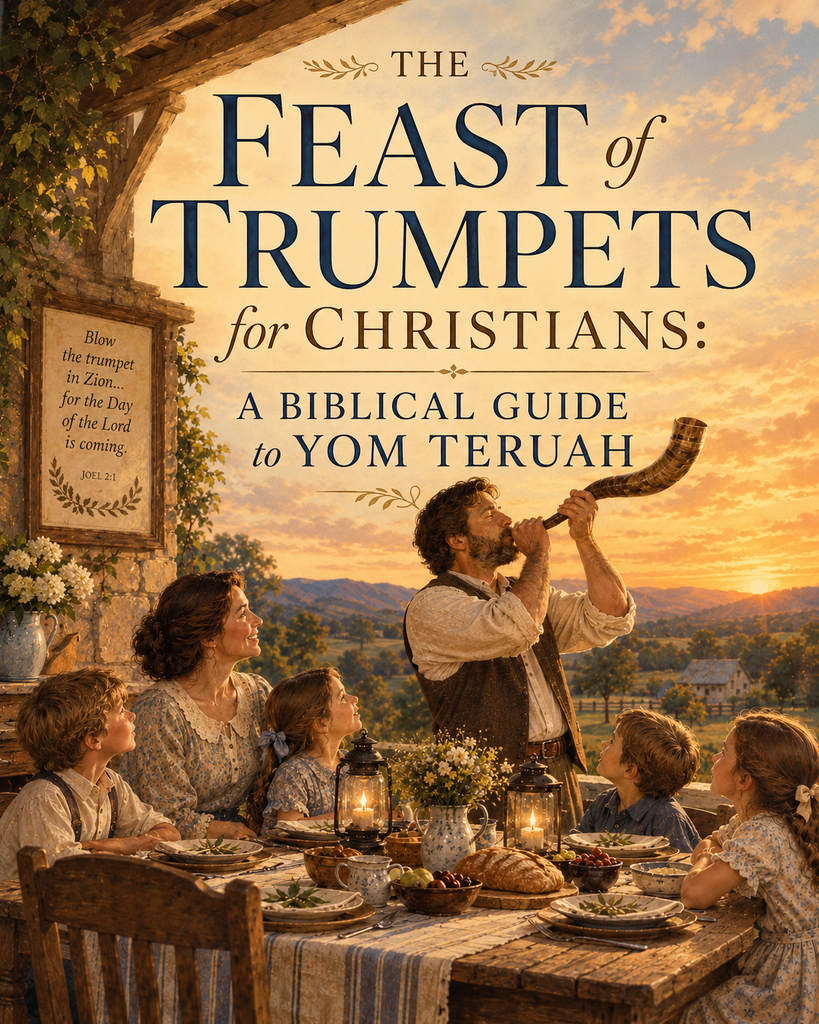
If you know other believers who observe the appointed times, gather together and share a meal, read scripture, pray together, sing and worship, and of course sound the shofars!
Talk about the return of Messiah.
If you do not have a local community that observes the biblical feast days, you can still set apart the day at home with your family.
Have a Special Meal
Scripture does not prescribe a specific menu for Yom Teruah. Prepare a meal that feels celebratory and special.
Some families enjoy creating their own traditions around the feast.
The important thing is not reproducing someone else’s customs, but intentionally setting the day apart before God.
Pray and Examine Your Heart
Because Yom Teruah carries the imagery of awakening and preparation, it is a natural time for reflection.
Ask Adonai to show you areas of your life that need correction.
Ask yourself things like, “Have I grown spiritually sleepy? Have I allowed distractions to interfere with my relationship with God? Is there something I need to repent of? Am I actually living as though Yeshua could return?“
Remember, the shofar or trumpet is not merely an exciting prophetic symbol, it is also a warning.
Teach Your Children the Meaning of the Trumpet
Children often love Yom Teruah because the shofar makes the feast fun and memorable.
Let them hear it. Let them try to blow it.
I purchased children’s “shofars” for my grandchildren to blow.
You can explain that throughout the Bible, trumpets announced important things and then tell them the greatest announcement still to come. The King is returning!
You Do Not Have to Recreate Judaism to Keep the Biblical Feasts
The goal of celebrating Yom Teruah and other appointed times is not to imitate modern Judaism, but to instead learn what the Bible actually teaches and to honor the times God Himself established.
Believers from the nations have been grafted into the people of God through Messiah (Romans 11:17) so we are one people.
The appointed times belong to God. And if we are His, these feasts are for us, the followers of Yeshua, too.
They tell His story.
Passover teaches us about redemption.
Unleavened Bread teaches us about leaving sin behind.
Firstfruits points toward resurrection.
Shavuot reminds us of covenant and the giving of the Spirit.
And Yom Teruah teaches us to listen for the trumpet.
Waiting for the Trumpet
The Feast of Trumpets is both joyful and serious.
It is joyful because we are waiting for our King.
And it is serious because the Day of the Lord will also be a day of judgment. It’s the great and terrible day!
For those who belong to Messiah, the trumpet represents hope.
The dead will rise.
The faithful will be gathered.
The King will return.
The Kingdom will come.
And so each year, when the seventh month begins and the shofars sound, we are reminded of the promise that is yet to be fulfilled.
We do not know the day or the hour, but we know the King is coming.
And until He does, we remain alert, faithful and listening for the sound!
A Closing Prayer
“Adonai, thank You for giving Your people appointed times that teach us about Your plan of redemption.
As we remember the Feast of Trumpets, help us to hear its message clearly. Wake us up from spiritual sleep. Teach us to watch, to pray, and to live faithfully while we wait for Yeshua.
Prepare our hearts for the day when the final trumpet sounds and the King returns.
Help us to not to become distracted by the cares of this world, but to remember that Your Kingdom is coming.
May our homes, our families, and our lives be ready to welcome the King.
In the name of Yeshua, Amen.”